
Candidate Status
Candidate Status Page
The Candidate Status page allows you to manage and categorize candidates through various stages of the recruitment process. You can assign status labels to candidates to track their progress, making it easier to see where each candidate stands in the recruitment workflow.
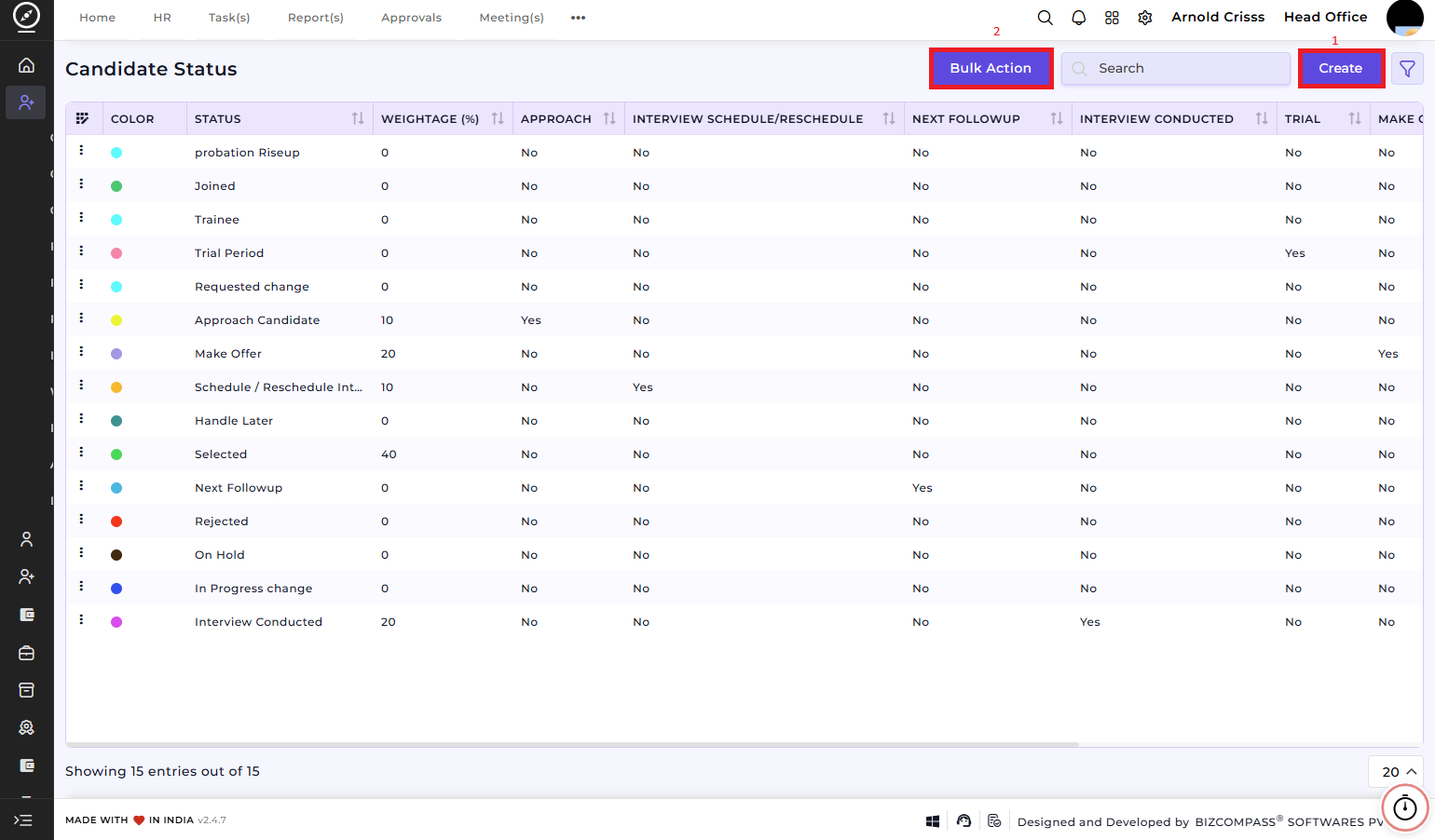
1) Create Candidate Status:
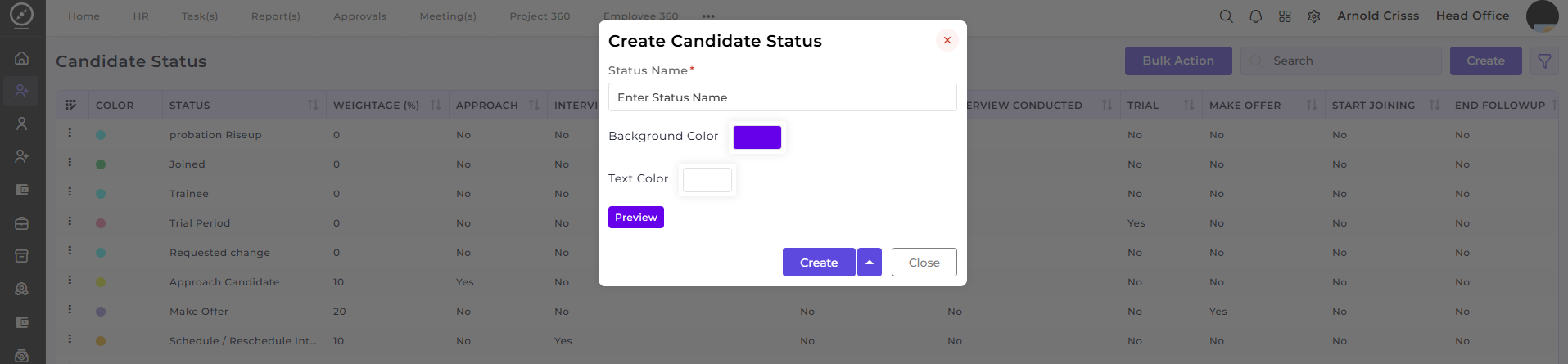
On this page, you can create a new candidate status by following these steps:
-
Enter the Status Name: The name represents a specific stage in the recruitment process, such as "Selected," "Rejected," "Interview Conducted," etc.
-
Choose Background Color: Select a color that represents the status visually.
-
Select Text Color: Choose the text color to complement the background and ensure readability.
Once a status is created, it is used to:
-
Mark candidates as they progress through different stages of hiring.
-
Track the status of candidates automatically.
-
Filter candidates by status to manage follow-up actions.
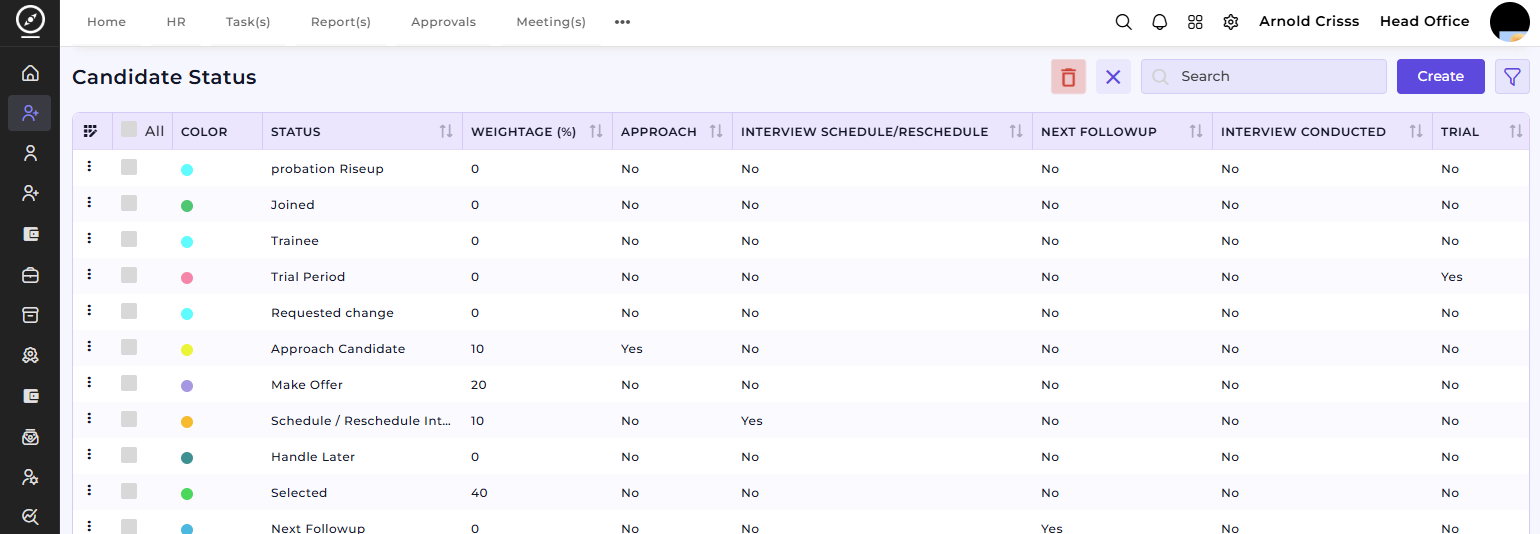
2) Bulk Action:
The Bulk Action button allows you to delete multiple candidate statuses at once, streamlining the management process.
Candidate Reject Reason Page
The Candidate Reject Reason page allows you to define reasons for rejecting a candidate. These reasons can be linked to interview stages or overall rejection and provide a standardized method of tracking why candidates are not moving forward in the process.
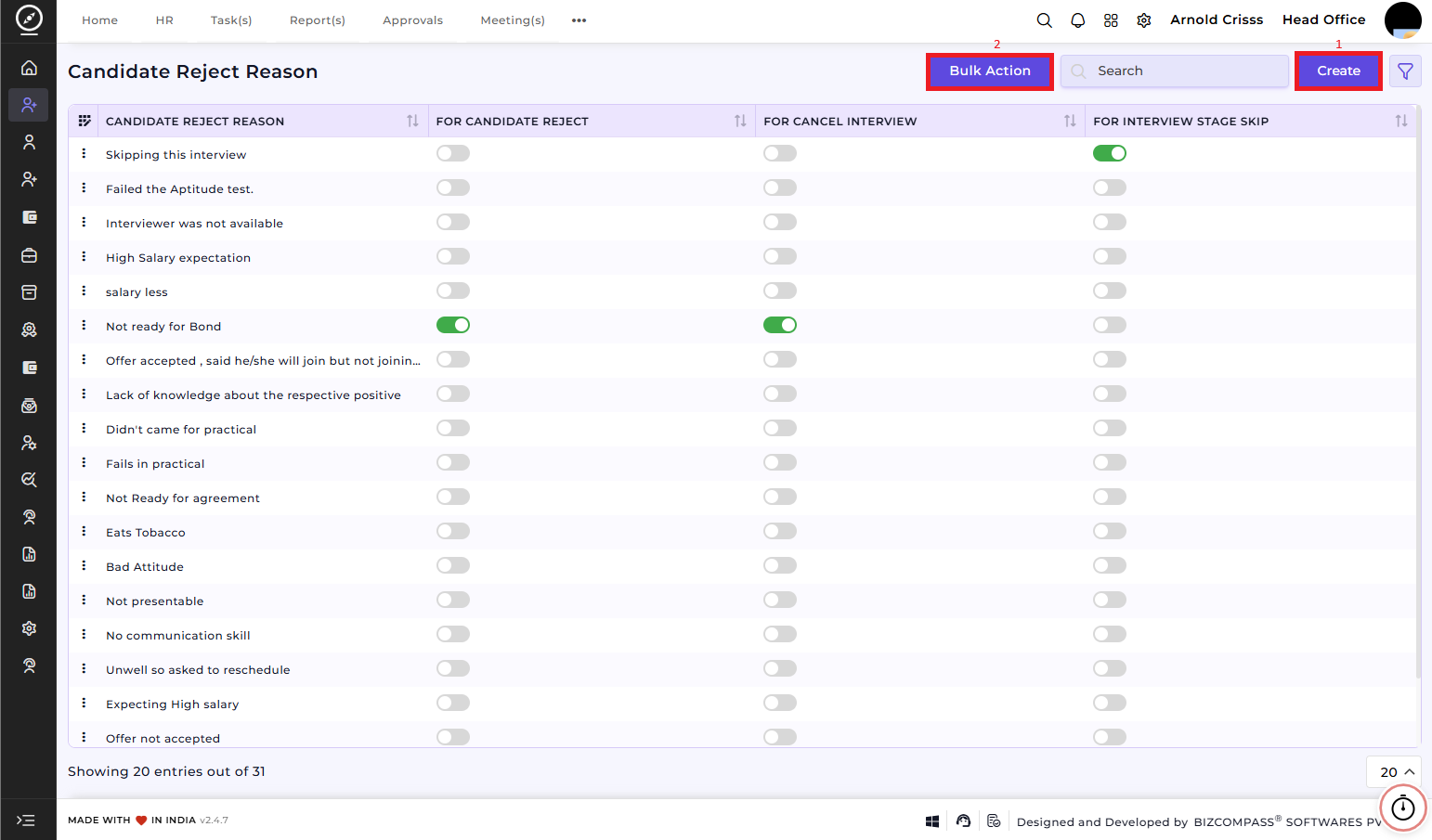
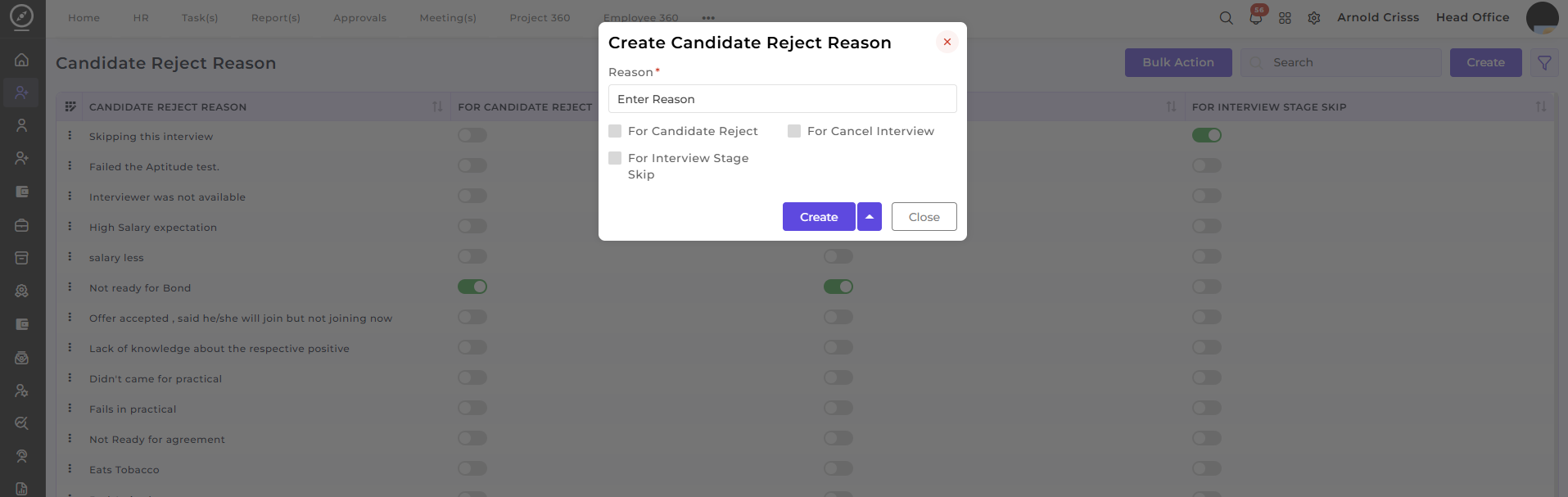
1) Create Candidate Reject Reasons:
Enter the Reason: This is where you define why the candidate is rejected, such as "Salary Expectations Too High," "Lack of Experience," or "Failed the Aptitude Test."Choose Rejection Type: You can specify if the reason applies to the overall rejection or specific interview stage rejection.Enable/Disable Options: You can activate or deactivate each reason based on your needs for filtering purposes.
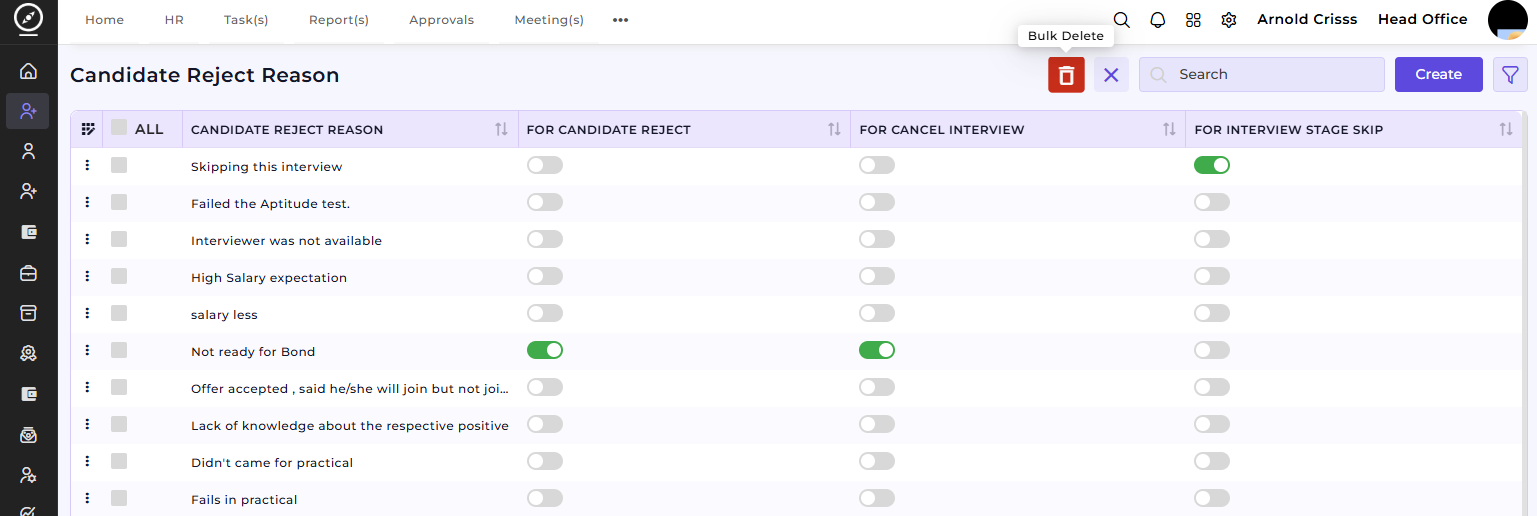
2) Bulk Action:
The Bulk Action button allows you to delete multiple candidate reject reasons at once, streamlining the management process.
Once a reason is created, it is used to:
Track and categorize rejected candidates.Record specific reasons linked to candidates’ interviews.Help HR teams improve their recruitment strategy by understanding common reasons for rejection.