
Opening
The Opening(s) page is used to create job openings in the recruitment module. It defines the positions, number of vacancies, and recruitment requirements for which the organization wants to run the recruitment process.
After creating an opening/position:
-
Recruiters can add candidate applications
-
Recruiters can reach out to candidates
-
Managers or HRs can generate resource requests for these openings
-
The organization can manage the placement process for these positions
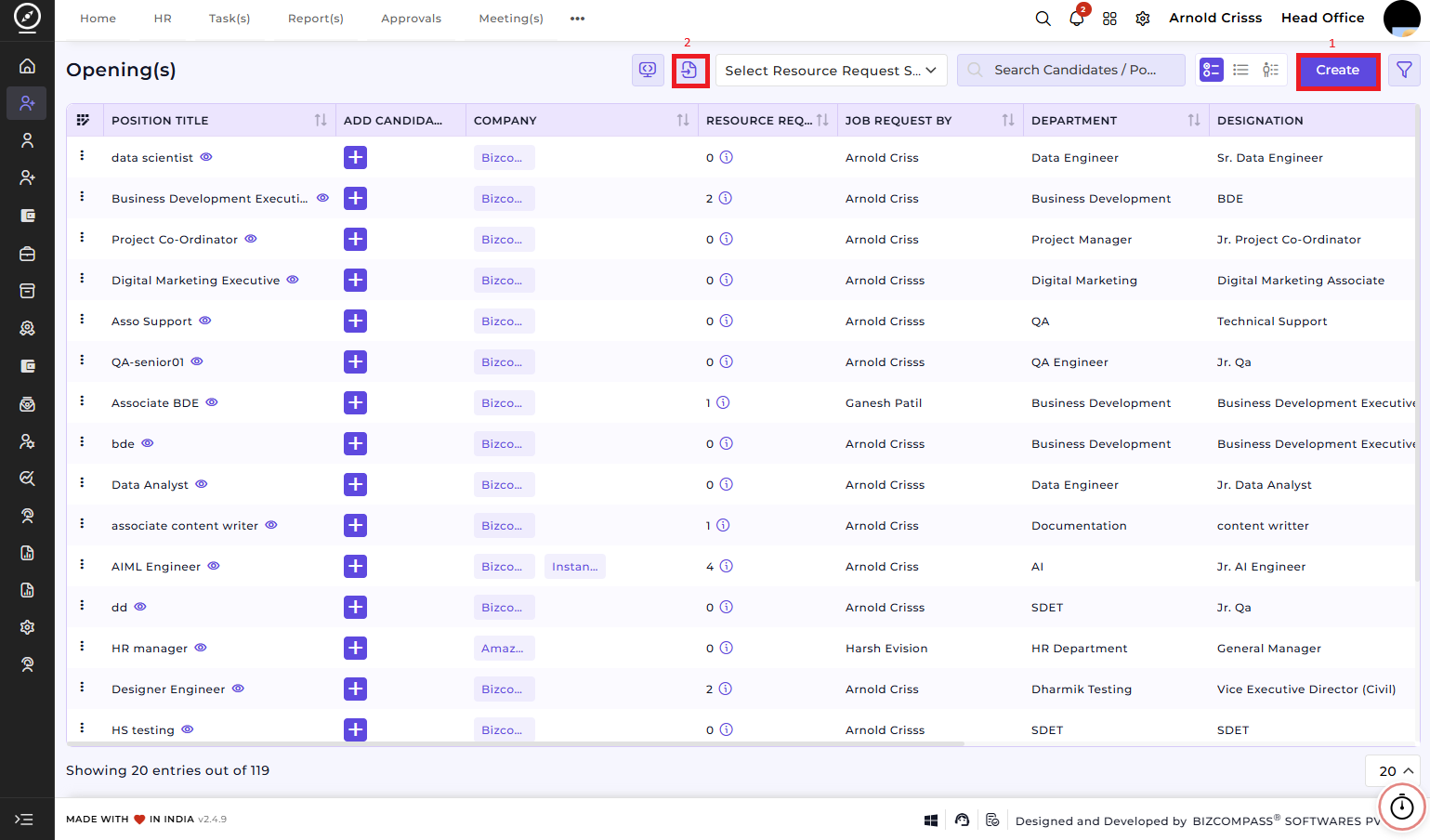
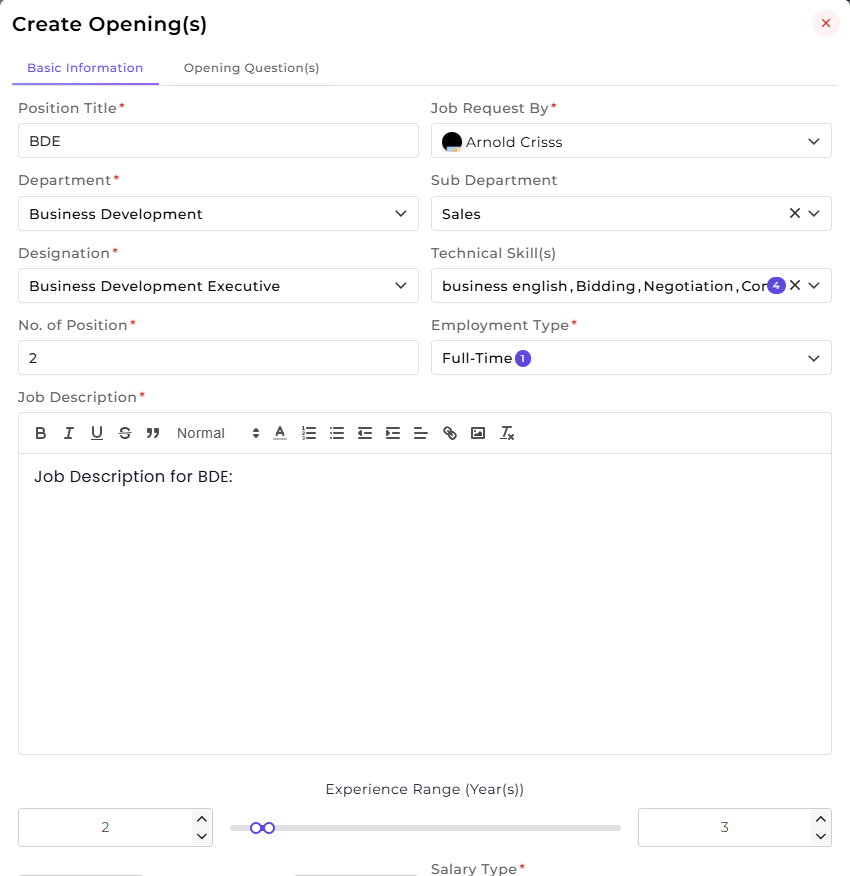
1) Create Opening(s):
Position Name:
1. EnterEnter the PositionTitleName (e.g., QA Tester, BDE, Associate Developer) for which recruitment is required.
Requested By:
.2.SelectJob RequesttheBy(theperson who has requested thehiring)opening.
Department:
- Select
3.the department for which the opening is created (e.g., For Associate Developer, the department is usually Engineering or Development)
Sub Department:
- Select the Sub Department if required, based on the selected department.
Designation:
- Select the designation related to the position.
Technical Skills:
- Select or create the
DepartmenttechnicalandskillsSubrequiredDepartment.4.Select or createfor the opening.
Example:
For a developer role, the required skills may include:
-
Specific programming languages
-
DesignationDebugging skills -
Development frameworks
These skills define the minimum technical requirements for candidates.
Total Positions:
- Enter the total number of vacancies available for the position.
Employment Type:
- Select
5.theSelectemployment type (e.g., part time orcreatefull time)
Job Description:
- Enter the job description.
- This description will be displayed on the public job posting page for candidates.
Experience Range:
- Define the required experience range.
- The range can be selected using a draggable slider.
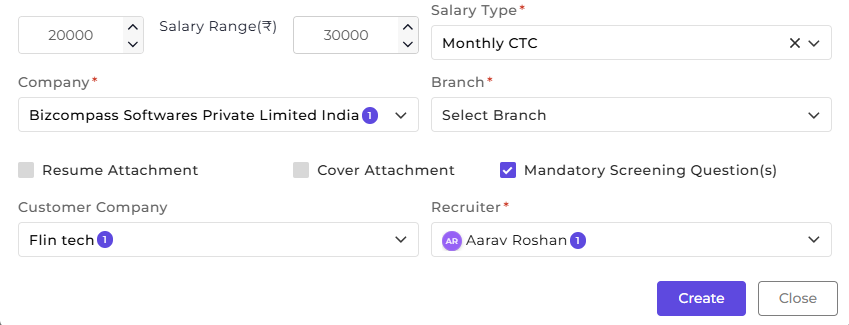
Salary Range:
TechnicalEnterSkill(s)the salary range for therole.position.6.EnterSelect the salary type, such as CTC, Monthly CTC and Yearly CTC.
Company and Branch:
Number of Positionsrequired.7.Selector createtheEmploymentcompanyType.for8. Addwhich the recruitment process is running.Job Descriptionexplaining the role and responsibilities.9. Set theExperience Range(Years).10. Enter theSalary RangeandThen select theSalarybranchType.11. Selectwhere the position is available.Company
Resume Attachment:
12.Enable Resume AttachmentorCover Attachmentifrequiredand select theRecruiterwho will manage this opening.13. You can also chooseif thepre-definedorganization wants candidates to upload their resume while applying.
Cover Letter Attachment:
- Enable Cover Letter Attachment if the organization requires candidates to submit a cover letter.
Screening QuestionsQuestions:
- Enable this option if screening questions are mandatory
shouldforbecandidates. - Screening
orquestionsnotare default questions provided bycheckingBIZCOMPASS®.
Customer Company:
- If the recruitment process is being conducted for a customer company, select the customer company here.
Recruiter:
- Select the recruiter responsible for this opening.
- Only employees whose employee role includes the Recruitment option will appear in the recruiter list.
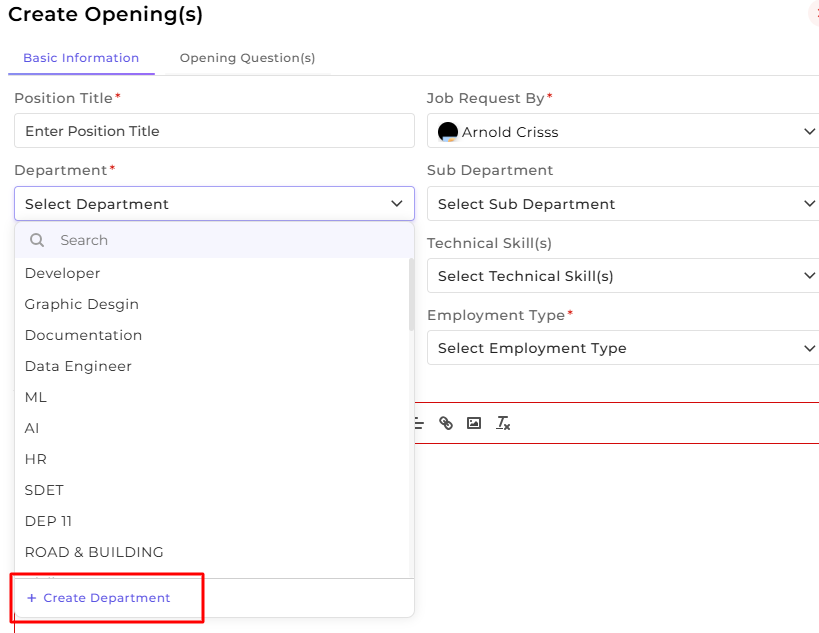
Note: You can create new Department, Sub-Department, Designation, Technical Skill(s), Employment Type, Company, Branch and Customer Company from here only as well as in their separate configuration pages (if you have access to them). An example of creating new Department while creating an opening is shown below.
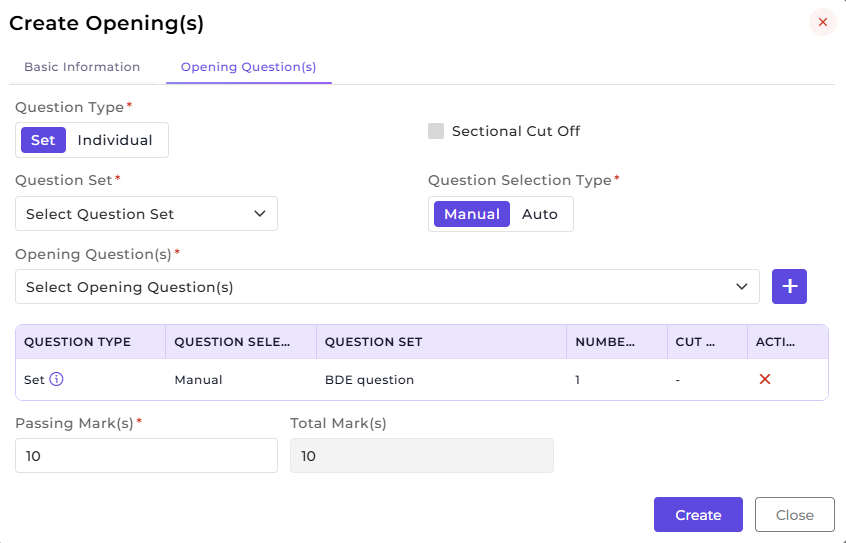
Opening Question Configuration:
Questions created in the AddingQuestion Master and arranged into Question Sets can be selected here for the opening.
The organization can select entire question sets or individual questions depending on the recruitment requirement.
Selecting Question Sets:
Question Selection Methods:
Select the Question Set from the list created in the Question Set page.
After selecting the set, the organization can define a Sectional Cut Off if required.
Two methods are available for selecting questions from a set:
1. Manual Selection:
2. Auto Selection:
In Manual Selection, the organization can manually choose specific questions from the selected set.
In Auto Selection, the organization can:Managing Questions in a Set:
Define the number of questions to be selected automatically
The system selects questions from the total questions available in the set
Each question set contains an info button (🛈) next to the word Set in the table. Using this option, the organization can configure the questions inside the set.
Opening Question Sets:
For Opening Question Sets, the Info option allows the organization to:Interview Question Sets:
Select or deselect questions
Mark whether a question is required
Update the passing points if applicable
For Interview Question Sets, the info option allows the organization to:
Aptitude Test Question Sets:
Select or deselect questions
Update the time required to answer each question
Modify the passing points if available
For Aptitude Test Question Sets, the Info option allows the organization to:
Duplicate Questions:
Select or deselect questions
Define the time to answer each question
Update passing points if applicable
If two different question sets are selected, and a question appears in both sets, the system shows a warning icon (⚠) next to that question. This helps identify duplicate questions across sets.
Passing Marks and Deviation:
Below the question table, there are fields to configure- Deviation and Total Passing Marks.
Deviation Type:
Deviation defines extra time allowed during the test.
Two types are available:
1. Fixed Deviation: A fixed number of extra minutes
Passing Marks:Selectis added to theQuestiontotalTypetest(SetorIndividual).2.EnableSectional Cut Offifrequired(if Set is selected).time.
2. Percentage-Based Deviation:3.Extra time is calculated as a percentage of the total time of all selected questions and question sets.SelectIf theQuestion Set(if Set is selected) orOpening Questions(if Individual is selected).4.Choose theQuestion Selection Type is Manual, the organization can define the total passing marks:required to clear the test.ManualThisordeterminesAuto(if Set is selected).5.Selectwhether the candidate hasOpeningsuccessfullyQuestion(s).6.TheTotal Mark(s)are calculated automatically (if Manual is selected).Then, enter thePassing Mark(s).7.ClickCreateto savepassed the openingwithscreeningquestions.stage.
2) Import Openings:
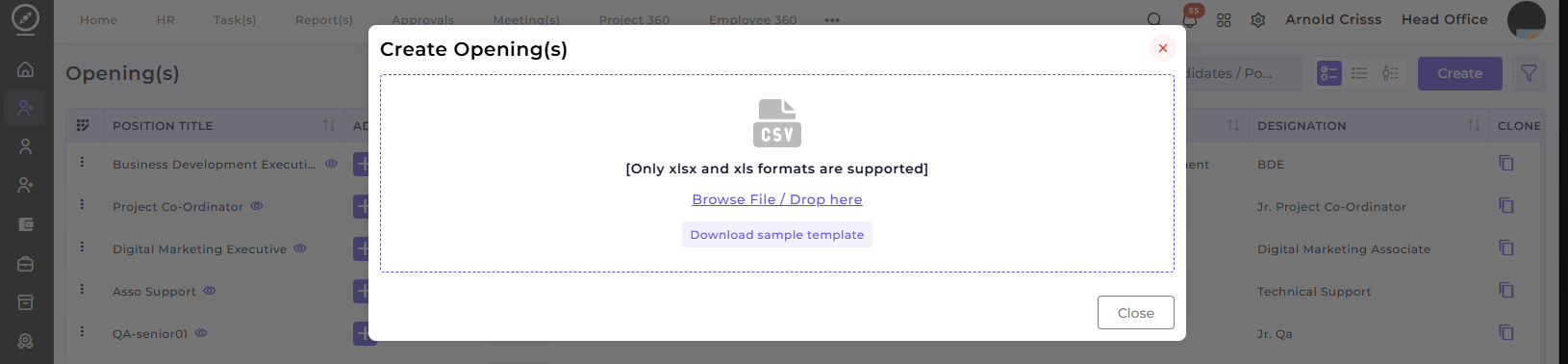
If you have bulk openings to add, you can use the Import Openings feature to upload multiple job openings at once, streamlining the process for large recruitment drives. You can also download a sample opening template from here.
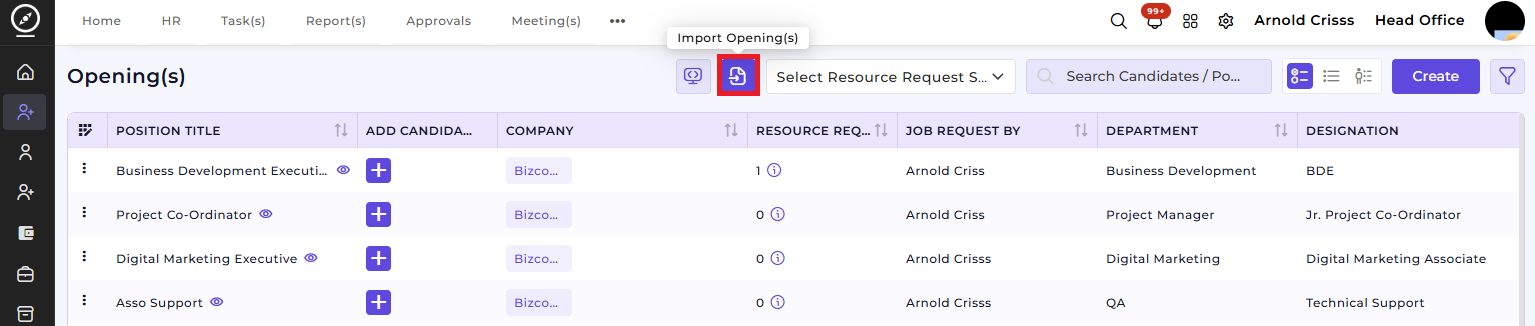
These openings can be used to raise a Resource Request in the future. With the Application List View and Resource Request List View sections in the same page as Opening(s), it makes it easier to track and manage all candidates and their applications.
=======================================================================================
Opening
The Opening page is used to create job openings in the organization. It defines the positions, number of vacancies, and recruitment requirements for which the organization wants to run the recruitment process.
After creating an opening/position:
Recruiters canadd candidate applicationsRecruiters canreach out to candidatesEmployees cangenerate resource requestsfor these openingsThe organization canmanage the placement processfor these positions
Creating an Opening
To create an opening, the following details must be provided:
Position Name
Enter the position name for which recruitment is required.
Examples:
Assistant ManagerAssociate DeveloperSenior Manager
Requested By
Select the person who has requested the opening.
Department
Select the department for which the opening is created.
Example:For Associate Developer, the department is usually Engineering or Development.
Sub Department
Select the Sub Department if required, based on the selected department.
Designation
Select the designation related to the position.
Example:For an Associate Developer opening, the designation will usually correspond to the Associate Developer role.
Technical Skills
Select the technical skills required for the opening.
Example:For a developer role, the required skills may include:
Specific programming languagesDebugging skillsDevelopment frameworks
These skills define the minimum technical requirements for candidates.
Total Positions
Enter the total number of vacancies available for the position.
Employment Type
Select the employment type.
Example:
Full TimePart Time
Job Description
Enter the job description.
This description will be displayed on the public job posting page for candidates.
Experience Range
Define the required experience range.
The range can be selected using a draggable slider.
Salary Range
Enter the salary range for the position.
Select the salary type, such as:
CTCMonthly CTCYearly CTC
Company and Branch
Select the company for which the recruitment process is running.
Then select the branch where the position is available.
Resume Attachment
Enable Resume Attachment if the organization wants candidates to upload their resume while applying.
Cover Letter Attachment
Enable Cover Letter Attachment if the organization requires candidates to submit a cover letter.
Screening Questions
Enable this option if screening questions are mandatory for candidates.
Screening questions are default questions provided by Bizcompass.
Customer Company
If the recruitment process is being conducted for a customer company, select the customer company here.
Recruiter
Select the recruiter responsible for this opening.
Only employees whose employee role includes the Recruitment option will appear in the recruiter list.
Opening Question Configuration
Questions created in the Question Answer Master and arranged into Question Sets can be selected here for the opening.
Question Set Or Question Selection
The organization can selectentire question sets or individual questionsdepending on the recruitment requirement.
Selecting Question Sets
Select thequestion setfrom the list created in theQuestion Set page.
After selecting the set, the organization can define asection cutoffif required.
Question Selection Methods
Two methods are available for selecting questions from a set.
Manual Selection
InManual Selection, the organization canmanually choose specific questionsfrom the selected set.
Auto Selection
InAuto Selection, the organization can:
Define thenumber of questions to be selected automatically
The system selects questions from thetotal questions available in the set
Managing Questions in a Set
Each question set contains anInfo button (🛈)next to the wordSetin the table.
Using this option, the organization can configure the questions inside the set.
Opening Question Sets
ForOpening Question Sets, the Info option allows the organization to:
Select or deselect questions
Mark whether a question is required
Update thepassing pointsif applicable
Interview Question Sets
ForInterview Question Sets, the Info option allows the organization to:
Select or deselect questions
Update thetime required to answer each question
Modify thepassing pointsif available
Aptitude Test Question Sets
ForAptitude Test Question Sets, the Info option allows the organization to:
Select or deselect questions
Define thetime to answer each question
Updatepassing pointsif applicable
Duplicate Questions
Iftwo different question sets are selected, and a question appears in both sets, the system shows awarning icon (⚠)next to that question.
This helps identifyduplicate questions across sets.
Passing Marks and Deviation
Below the question table, there are fields to configure:
Deviation
Total Passing Marks
Deviation Type
Deviation definesextra time allowed during the test.
Two types are available:
Fixed Deviation
Afixed number of extra minutesis added to the total test time.
Percentage-Based Deviation
Extra time is calculated as apercentage of the total time of all selected questions and question sets.
Passing Marks
If theQuestion Selection Type is Manual, the organization can define thetotal passing marksrequired to clear the test.
This determines whether the candidate hassuccessfully passed the opening screening stage.